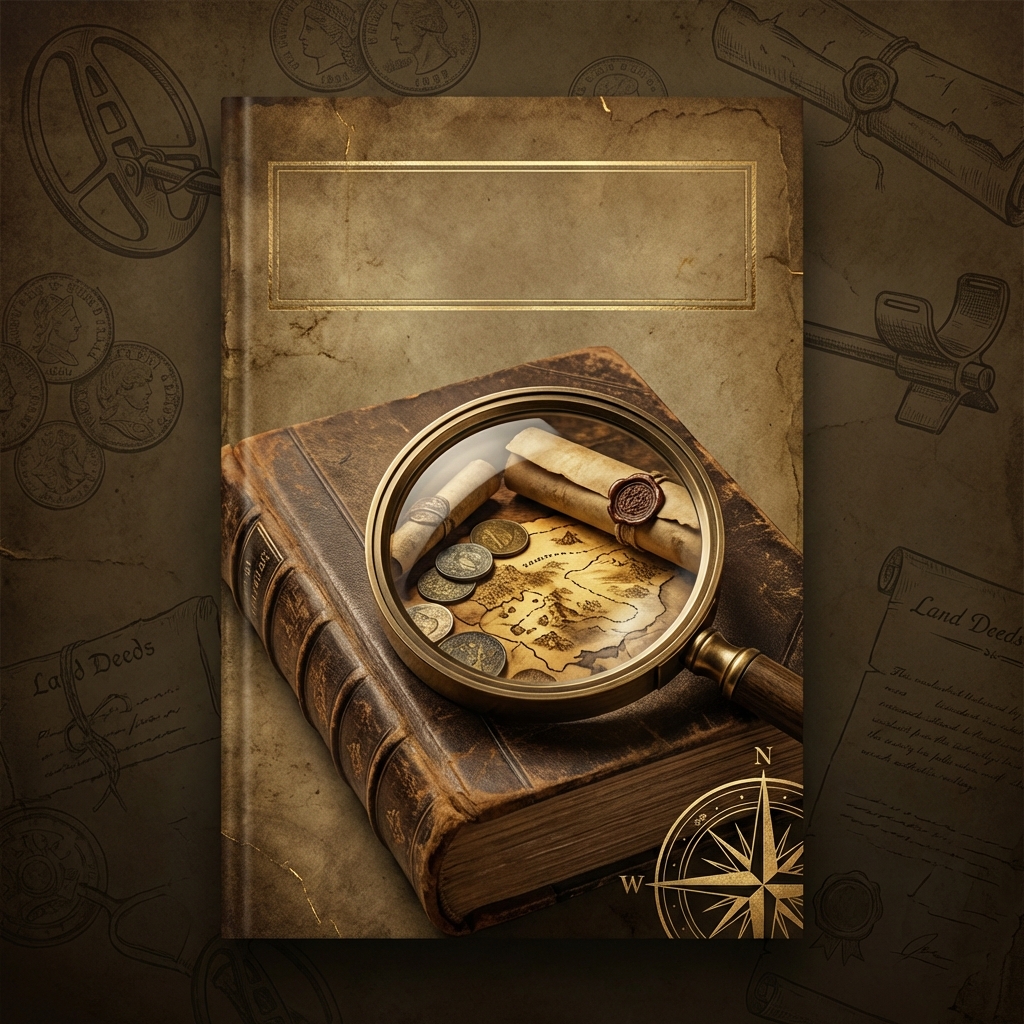
Treasure Hunter's Research Guide: The Professional Research System for Serious Discovery
Find What Others Miss
The Treasure Hunter's Research Guide is a 10-chapter research system that walks you through the same archival workflows professionals use to validate treasure legends before ever stepping into the field — covering historical map interpretation, property records analysis, and evidence-based site evaluation.
Treasure research is the systematic evaluation of historical documents, maps, records, and environmental context to assess whether a claimed site or legend is plausible before any physical exploration begins. It covers what sources to use for treasure research, how to use public records for treasure hunting, and the best archival search strategies for locating historically productive sites.
Here's the truth most treasure hunters never learn: Treasure is rarely lost — it's misunderstood. The difference between legends and discoveries is research discipline, not digging effort. This research system teaches the decision-making intelligence that separates documented finds from wishful thinking.
This isn't about becoming a better treasure hunter. It's about becoming a treasure researcher — someone who knows how to eliminate dead ends, validate claims, and recognize real opportunity long before the first hole is dug. Includes real case studies in treasure research, treasure research worksheets and checklists, and a curated directory of the best resources for treasure hunting research.
Updated February 2026 to reflect modern digital archives, AI-assisted research tools, and current legal frameworks.
$14.99
$65 valueSave $50!
What's Included:
- ✓ Instant Digital Download
- ✓ Lifetime Access
- ✓ 3 Exclusive Bonuses Included
- ✓ Printable Research Worksheets & Checklists
- ✓ Reusable Framework — Apply to Any Legend
- ✓ No Metal Detecting Required — Strategic Research
Secure 256-bit SSL Encryption. Powered by Stripe.
How Does Professional Treasure Research Work?
Professional treasure research follows a structured process that maximizes discovery probability before any physical exploration begins.
Identify the claim or legend
Begin with a specific legend, rumor, or historical reference. Evaluate the plausibility of the claim before investing research time.
Gather primary historical sources
Search archives, newspapers, land grants, military records, and shipping manifests for corroborating evidence.
Cross-reference maps and records
Overlay historical maps, survey maps, and Sanborn fire insurance maps with modern satellite imagery to identify changes in terrain and settlement.
Evaluate geographic plausibility
Assess terrain, river paths, trade routes, and natural disasters that may have erased or preserved the historical site.
Document findings before field exploration
Compile all research into a structured report with source citations before planning any physical site visit.
This guide is often used as a reference framework when evaluating historical claims, legends, or proposed exploration sites.
Who Should Use This Research Guide?
✓ This is for you if:
- ✓You want to think like a historical investigator, not a hobbyist
- ✓You believe the treasure is found on paper before it's found in the ground
- ✓You want to know which sites are worth pursuing — and which are dead ends
- ✓You value evidence-based decision-making over luck and guesswork
- ✓You're ready to adopt a repeatable research framework you'll use for years
✗ This is NOT for:
- ✗Casual metal detecting without research goals
- ✗Quick "get rich" treasure hunting shortcuts
- ✗Entertainment-only treasure fantasy with no methodology
- ✗Myth-only exploration without historical grounding
- ✗Trespassing or ignoring legal frameworks
Responsible treasure research means knowing when not to proceed. This guide emphasizes legal awareness, land status evaluation, and ethical decision-making — protecting both history and the researcher.
Research vs Field Exploration
Understanding the difference is what separates professionals from hobbyists.
| Factor | Research | Field Exploration |
|---|---|---|
| Approach | Document-based | Equipment-based |
| Risk Level | Low risk | High risk |
| Verifiability | Verifiable with sources | Speculative |
| Scalability | Scales intellectually | Scales physically |
| Cost | Minimal investment | Gear-intensive |
| Success Rate | 80% of discovery | 20% of discovery |
What Is Archival Research — and Why Does It Matter for Treasure Hunting?
Archival research is the process of locating, evaluating, and interpreting primary historical documents — letters, land grants, maps, military records, parish records, mining claims, and newspaper accounts — to reconstruct past events. For treasure hunters, these are the treasure history research techniques that separate documented discoveries from wishful thinking.
Historians research treasure legends by cross-referencing multiple independent sources. A single diary entry claiming buried gold means little. The same claim corroborated by a land survey, a newspaper article, and shipping records means you have a researchable lead. This guide teaches those best practices for historical archives research.
Sources & Tools Used in Treasure Research
Public Archives
State archives, county courthouses, and the National Archives hold land patents, homestead records, and military dispatches.
Historical Newspapers
Digitized newspaper databases reveal robberies, lost shipments, mining strikes, and town histories.
Historical Maps
Sanborn fire insurance maps, USGS topos, GLO survey plats, and railroad maps show how terrain and settlements changed.
Digital Research Tools
Satellite imagery, LiDAR data, genealogical databases, and online document repositories accelerate modern research.
Worksheets & Checklists
Systematic research requires documentation — the guide includes treasure research worksheets and checklists for every chapter.
Oral History
Local interviews and family stories provide fragments of truth that archives alone cannot capture.
Why do historical maps matter in treasure hunting? Because terrain changes — rivers shift, roads vanish, towns are abandoned. Understanding how to overlay historical cartography on modern imagery is one of the most valuable treasure research skills you can develop.
Why Research Beats Luck Every Time
Most treasure hunters spend their time swinging a detector over random fields. The ones who actually find things? They spent weeks in libraries, courthouses, and digital archives before they ever left home.
This guide teaches you to think like a historian — to evaluate evidence critically, cross-reference conflicting accounts, and build a case for why something might be in a specific location. That's the difference between hunting and finding.
The methods in this guide draw from professional archival research, historical geography, and investigative methodology — adapted specifically for the treasure hunting community.
If This Sounds Familiar…
This research system was written for that exact moment — when curiosity needs structure.
After Completing This Research System, You'll Be Able To:
The most valuable skill in treasure research isn't finding clues — it's eliminating false ones. This system trains that skill deliberately.
What This One Guide Replaces
One coherent research system — used intentionally, applied repeatedly.
This isn't something you read once and move on from. It's a repeatable framework you'll use every time a new story, map, or claim crosses your path.
Why This Knowledge Is Rare
Most serious treasure researchers don't publish their methods. Not because they're secretive — but because the methods are difficult to explain and easy to misuse without context.
This guide exists to preserve those methods clearly, ethically, and responsibly — so that disciplined researchers can apply them with confidence and integrity.
Very few people ever learn how professional treasure research actually works. Fewer still document it clearly enough to pass on.
Built on Ethical Research Principles
Responsible treasure research isn't about exploitation — it's about preservation, legality, and respect for history. This guide emphasizes ethical methods, lawful access, and disciplined documentation so your discoveries add value rather than controversy.
Every chapter includes legal context, ethical considerations, and best practices for working with landowners, institutions, and historical sites. The research community depends on people who do this responsibly.
Explore More Treasure Hunting Research
Treasure Research Hub
Your starting point for treasure research
How to Research Legends
Step-by-step treasure research process
Archival Research Methods
Navigate archives like a professional
Verify Historical Maps
Authenticate maps, journals, and accounts
Evaluate Historical Claims
Professional source evaluation methods
Primary vs Secondary Sources
Which sources actually matter
Lessons from Failed Searches
What poor research costs
Discoveries from Research
Real finds enabled by archival work
Library of Congress Guide
Navigate over 170 million items
Sanborn & Survey Maps
Building-level historical detail
Research Checklist
Free 5-phase research checklist
AI & Historical Research
How AI is transforming research
Abandoned Settlements
Research ghost towns and lost sites
What You'll Get
Everything you need to transform your life, delivered instantly
Research Methodology
The 80/20 principle of treasure hunting: 80% of success happens before you leave home.
Historical Documents
Mining newspapers, diaries, and official records to reveal forgotten gathering places.
Maps & Cartography
Read old maps, identify vanished roads, and overlay historical geography on modern terrain.
Property Records
Trace land ownership through centuries to identify productive sites.
Ghost Towns & Mining Claims
Research abandoned settlements and mining districts in the American West.
Oral History Collection
Extract fragments of truth from local legends and family stories.
Digital Research Tools
The modern arsenal: satellite imagery, historical aerials, and online archives.
Legal Framework
Hunt right and stay legal—the regulations you must understand.
🎁 Exclusive Bonuses Included
Quick-Start Research Checklist (PDF)
Systematic checklist for researching any detecting site.
Research Resource Directory (PDF)
100+ curated links to archives, databases, and research tools.
Case Studies Collection (PDF)
Detailed breakdowns of 5 real research-to-recovery investigations.
What Others Are Saying
“The archival research chapter alone was worth it. I found records nobody else had looked at and located a site that yielded colonial-era coins.”
Frequently Asked Questions
Got questions? We've got answers.
Begin Researching Like a Professional
Stop guessing. Start verifying.
If you've ever felt drawn to hidden history, unanswered questions, and the thrill of uncovering truth — this research system gives that curiosity direction.
Includes $50 in bonus materials