Price note (reviewed September 27, 2026): Older dollar amounts, premiums, allocations, and return figures in this article are historical or illustrative, not live quotes. Their original source is not documented here. Check dated sold listings and current dealer quotes before using any number to buy or sell.
Gem Quality Standards
Why Gem Grades Matter for Investors
The MS-65 to MS-69 range represents the sweet spot of coin collecting - high enough quality to command significant premiums, yet available enough to maintain liquidity. These gem grades combine exceptional eye appeal with strong investment fundamentals.
Grades MS-65 through MS-69 describe different levels of mint-state preservation. Their availability and price gaps vary by coin, date, mint, and grading service. Before paying for a higher grade, compare actual images and dated completed sales of the same issue.
Grade Specifications
MS-65 to MS-69 Grade Characteristics
Each grade level within the gem range has specific characteristics and market positioning that affect investment potential and collector appeal.
🌟
MS-65: Gem Entry Level
The gateway to gem status. Minor contact marks and slight luster breaks acceptable, but overall outstanding eye appeal required. This grade often represents the best value proposition.
• Contact Marks: Few, small marks acceptable
• Eye Appeal: Above average to exceptional
• Investment Value: Entry point to gem premiums
• Population: More available than higher grades
• Registry Points: Solid competitive scoring
✨
MS-66: Quality Gem
Notable improvement in surface quality and eye appeal over MS-65. Fewer and smaller contact marks with better luster preservation and overall aesthetic appeal.
• Surface Quality: Noticeably cleaner surfaces
• Luster: Strong, well-preserved mint luster
• Premium Jump: Significant increase over MS-65
• Collectibility: Popular among serious collectors
• Market Demand: Strong registry set appeal
🏆
MS-67: Superb Gem
Exceptional quality with minimal surface imperfections. Outstanding luster, sharp strike, and superior eye appeal make this grade highly desirable for both collectors and investors.
• Surface Preservation: Nearly pristine condition
• Strike Quality: Full, sharp design definition
• Investment Grade: Premium quality with strong demand
• Registry Favorite: High points and competitiveness
• Liquidity: Excellent resale potential
💫
MS-68: Choice Superb
Near-perfect quality with only the most minor imperfections visible under magnification. Outstanding specimens that approach the theoretical ideal.
• Rarity Level: Significantly fewer examples available
• Premium Territory: Major value jumps over MS-67
• Collector Status: Trophy-level specimens
• Registry Power: Top-tier competitive scoring
• Investment Potential: Strong appreciation candidate
🌟
MS-69: Superb Gem Plus
One step below perfection. Exceptional specimens with minimal visible imperfections and outstanding overall quality. The highest practical grade for most collecting goals.
• Near Perfection: Only minute imperfections visible
• Extreme Rarity: Very limited populations
• Maximum Appeal: Outstanding visual impact
• Registry Elite: Highest competitive points
• Investment Summit: Premium grade without MS-70 extremes
📊
Grade Comparison Summary
Understanding relative rarity, premium structure, and investment characteristics across the gem grade spectrum helps optimize collecting and investment decisions.
• Population counts differ by issue; check the specific report.
• Premium Acceleration: Exponential value increases
• Market Liquidity: MS-65-67 most liquid
• Investment Sweet Spot: MS-66-67 optimal balance
• Registry Competition: MS-68+ for elite sets
Market Analysis
Gem Grade Investment Dynamics
Understanding premium structures, population data, and market demand patterns helps identify optimal investment opportunities within the gem grade range.
Typical Premium Structure: 1921 Morgan Silver Dollar Example
For this date or grade, compare several recent completed sales of the same mint and condition. A single undated price is not a reliable current value.
Investment Insights:
• MS-65 Barrier: Major premium jump entering gem status
• MS-66-67: Strong value appreciation with reasonable supply
• MS-68 Cliff: Population scarcity drives extreme premiums
• Registry Impact: Competition increases demand at all levels
• Market Cycles: Gem grades show strongest appreciation
• Liquidity: MS-65-67 have broadest buyer base
Population Rarity
There is no standard percentage drop from one grade to the next. Read the exact date-and-mint count in a current population report and compare it with actual sale results.
Registry Competition
PCGS and NGC registry sets create ongoing demand for high-grade coins, with set builders competing for finest known examples and highest rankings.
Market Cycles
Grade premiums can rise or fall with collector demand. A lower grade may be easier to resell at some prices; compare dated completed sales of the exact issue.
Grading Service Comparison
PCGS vs NGC in Gem Grades
Understanding subtle differences between PCGS and NGC grading standards and market premiums in the gem range helps optimize investment decisions.
🔷
PCGS Gem Grade Characteristics
PCGS gem grades typically command slight premiums in the marketplace, particularly for registry set coins and modern issues. Their grading can be marginally stricter in some series.
PCGS Advantages in Gem Grades:
• Higher market premiums in most series
• Registry set popularity drives demand
• Stronger modern coin market presence
• CAC crossover opportunities
• TrueView photography adds value
Typical Premium Differences:
• Compare the same issue and grade across services using dated sales.
• A holder label alone does not establish a fixed price premium.
• MS-68+: Variable, series dependent
• Registry interest can affect demand, but premiums vary.
🔶
NGC Gem Grade Characteristics
NGC offers consistent grading standards and often represents better value propositions for investors seeking gem quality without paying maximum premiums for the holder.
NGC Advantages in Gem Grades:
• Consistent, reliable grading standards
• Better value propositions in most series
• Excellent classic U.S. coin recognition
• Strong world coin and ancient divisions
• Superior variety attribution services
Strategic Considerations:
• Compare actual coins and transactions before assuming one service costs less.
• Equal quality, lower premiums
• Crossover potential to PCGS
• Better for budget-conscious collecting
Strategic Approaches
Gem Grade Investment Strategies
Different approaches to investing in gem grade coins optimize for various goals including value appreciation, registry competition, and portfolio building.
💰
Value-Focused Strategy
Target MS-65 to MS-67 grades where premium structures offer the best balance between quality and cost. Focus on series with strong fundamentals and growing collector bases.
• Target Range: MS-65 to MS-67 sweet spot
• Series Focus: Morgan dollars, Mercury dimes, Walking Liberty
• Service Choice: NGC for value, PCGS for premiums
• Timing: Buy during market weakness
• Exit Strategy: Sell during collector strength
🏆
Registry Competition
Pursue MS-67+ grades for competitive registry sets. Focus on PCGS for registry participation and target series with active competition and point systems.
• Grade Target: MS-67 minimum, MS-68+ preferred
• Service Preference: PCGS for registry systems
• Series Selection: Popular, competitive sets
• Competition Research: Study set rankings and gaps
• Upgrade Path: Continuous improvement strategy
📈
Growth Speculation
Target undervalued series or dates in gem grades before broader market recognition. Focus on population-scarce coins with growth potential.
• Research Focus: Population reports and trends
• Series Identification: Undervalued or emerging markets
• Grade Strategy: MS-66-68 for optimal risk/reward
• Timing Entry: Before market recognition
• Portfolio Allocation: Limited exposure per speculation
🔄
Crossover Trading
Buy high-end examples from one service and attempt crossover to the other for potentially higher grades or better market acceptance.
• Target Candidates: High-end NGC to PCGS crosses
• Grade Research: Understand service differences
• Risk Management: Factor crossover costs and risks
• Market Timing: Crossover during favorable conditions
• An upgrade submission has no guaranteed outcome and adds fees.
🎯
Type Set Assembly
Build comprehensive type sets using gem grades for visual impact and investment appreciation. Balance grades across different denominations and eras.
• Grade Consistency: MS-65-67 across set for uniformity
• Era Balance: Represent all major design periods
• Denomination Mix: Cents through dollars
• Budget Optimization: Prioritize key types first
• Display Value: Museum-quality presentation
💎
Trophy Hunting
Focus on MS-68 and MS-69 examples of key dates or popular series for ultimate collecting satisfaction and long-term appreciation potential.
• Grade Focus: MS-68-69 for trophy status
• Key Date Priority: Scarce dates in top grades
• Series Selection: Popular, well-known types
• Patience Required: Wait for exceptional opportunities
• Premium Acceptance: Pay for finest available quality
Master the Gem Grade Sweet Spot
MS-65 through MS-69 grades offer the optimal balance of quality, rarity, and investment potential in numismatics. Whether building registry sets, pursuing trophy coins, or optimizing investment returns, understanding these gem grades is essential for success. Research current gem grade populations and market values using a current coin reference to identify the best opportunities in today's market.
Put this guide to work
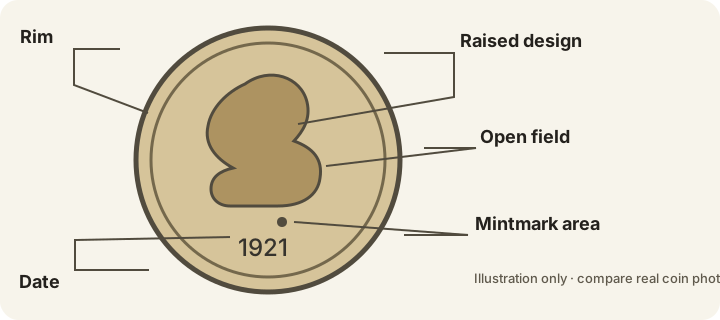
Study MS-65 and MS-69 images for the same series, under similar lighting. Record visible marks and luster. Check population and recent sold prices before deciding whether the larger premium is justified.
Check before you decide
Price jumps between adjacent grades are specific to a date and mintmark. Avoid a universal percentage rule.
Check the full cost
For a practice sale, if you pay $40 for a coin and later sell it for $50, then spend $7 on selling fees and $7 on postage, you keep $36. That is $4 less than you paid. These are teaching numbers, not a market quote. Enter your own price, fees, and shipping in the coin calculator before buying or listing.
Sources and visual references
Keep learning
Continue with the coin guide index or browse coins in the store.
Loading comments…