← Back to Contemplative Prayer
Orthodox Hesychasm
Prayer of the Heart: Stillness, the Jesus Prayer, and Guarding the Nous
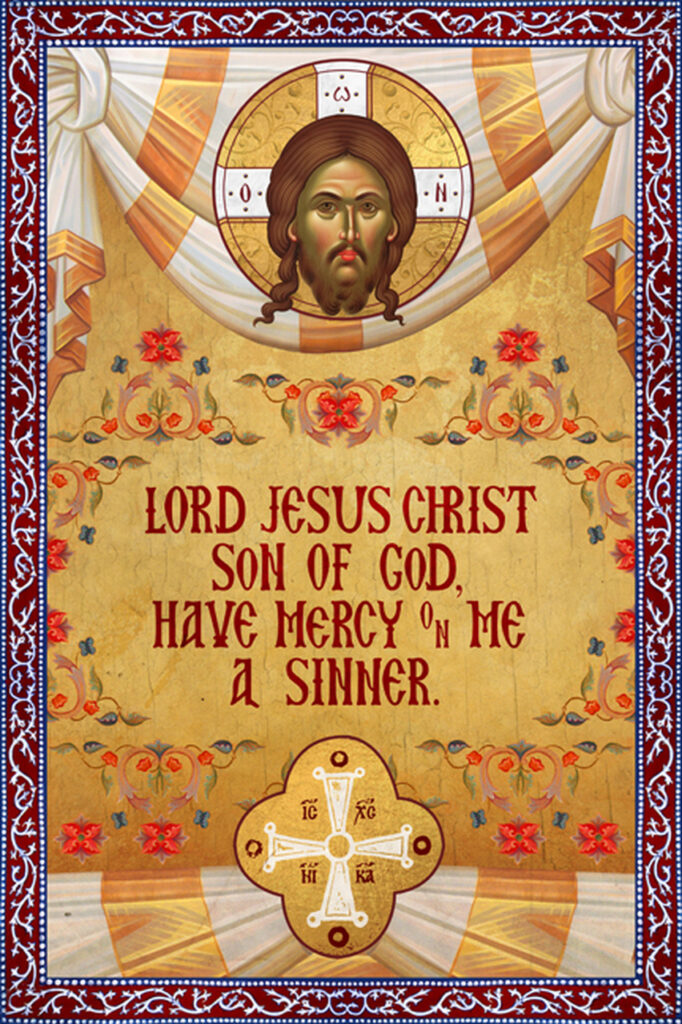
The prayer rope (chotki or komboskini) aids in the continuous recitation of the Jesus Prayer
Hesychasm (from Greek hesychia, "stillness") is the Eastern Orthodox contemplative tradition focused on inner stillness and the Jesus Prayer: "Lord Jesus Christ, Son of God, have mercy on me, a sinner." Unlike Western traditions that may use imagination, Hesychasm deliberately avoids all inner images, seeking pure attention to God through watchfulness (nepsis) and guarding the heart (nous).
From the Desert to Mount Athos
Hesychasm has its roots in the Desert Fathers of 4th-century Egypt—monks like Evagrius Ponticus and John Cassian who developed sophisticated teachings on prayer, temptation, and the purification of the heart. Their wisdom was preserved and developed in the great monasteries of Sinai, Constantinople, and ultimately Mount Athos.
In the 14th century, St. Gregory Palamas defended Hesychasm against Western critics, articulating the distinction between God's unknowable essence and His knowable energies—the uncreated light that transforms those who pray. This theology remains central to Orthodox spiritual life.
"Descend with your attention into the heart, and there stand before the face of the Lord, ever-present, all-seeing, within you." — St. Theophan the Recluse
Today, Hesychasm remains the living heart of Orthodox monasticism and is increasingly practiced by laypeople seeking authentic Christian contemplation.
The Jesus Prayer
"Lord Jesus Christ, Son of God, have mercy on me, a sinner."
Κύριε Ἰησοῦ Χριστέ, Υἱὲ τοῦ Θεοῦ, ἐλέησόν με τὸν ἁμαρτωλόν.
This brief prayer contains the fullness of the Gospel: the name of Jesus (at whose name every knee shall bow), a confession of His divinity, a plea for mercy, and an acknowledgment of our need. It is repeated continuously—with the breath, with a prayer rope, throughout the day and night.
The goal is not mechanical repetition but the descent of the prayer from the lips to the mind to the heart, where it eventually "prays itself" in the depths of the soul. This is the prayer of the heart—continuous communion with God beneath the surface of conscious thought.
Common Variations:
- "Lord Jesus Christ, have mercy on me."
- "Lord Jesus Christ, Son of God, have mercy on me."
- Simply: "Lord, have mercy." (Kyrie eleison)
Core Elements of Hesychasm
1. Hesychia (Stillness)
Stillness is not merely external silence but interior quiet—the calming of thoughts, passions, and mental noise so that the soul can attend to God alone. This requires withdrawal from unnecessary distraction and the cultivation of inner recollection.
Practice: Begin with external silence and solitude. Let stillness gradually penetrate inward.
2. Nepsis (Watchfulness)
Watchfulness is vigilant attention to the movements of the mind—observing thoughts as they arise and cutting them off before they take root. This is spiritual warfare: refusing consent to temptation at its very first appearance.
Practice: Notice thoughts without engaging them. Return immediately to the Jesus Prayer.
3. Guarding the Nous
The nous (often translated "intellect" or "spiritual mind") is the deepest center of the person—the eye of the soul that perceives God. Guarding the nous means keeping this center clear from images, fantasies, and demonic intrusion.
Key principle: The nous must be kept free of all images—even holy ones. God is beyond images.
4. Prohibition of Visualization
Unlike Ignatian contemplation, Hesychasm forbids the use of imagination in prayer. Any inner images—even of Christ, the saints, or heaven—are considered dangerous distractions that can become doors for spiritual delusion.
Warning: If images arise, they are to be ignored, not engaged. Never "see" anything intentionally.
5. Spiritual Fatherhood
Hesychasm absolutely requires guidance from an experienced spiritual father (starets or geronta). Self-directed Hesychast practice is considered extremely dangerous. The tradition insists on obedience to a proven guide.
Reason: The risk of prelest (spiritual delusion) is too great without oversight.
Prelest: The Danger of Spiritual Delusion
Prelest (Russian: прелесть, "spiritual delusion") is perhaps the most important concept in Hesychast safety teaching. It refers to a state where the practitioner has been deceived—by the enemy, by the passions, or by the imagination—into believing they have attained spiritual heights they have not reached.
Signs of Prelest:
- Belief in one's own spiritual advancement
- Desire for visions, locutions, or unusual experiences
- Pride in one's prayer practice
- Contempt for "ordinary" Christians
- Resistance to correction or guidance
- Intense inner experiences without growth in humility
- Fascination with one's own spiritual state
"He who has seen himself is greater than he who has seen angels." — St. Isaac the Syrian
The antidote to prelest is humility, obedience to spiritual authority, and suspicion of all spiritual experiences. The safest prayer is the one that leads to increased awareness of sin and dependence on God's mercy.
What Hesychasm Is NOT
- Not a mantra. The Jesus Prayer invokes a Person—the living Christ—not a sound or vibration.
- Not mindfulness meditation. The goal is not present-moment awareness but encounter with God.
- Not self-directed. Authentic Hesychasm requires a spiritual father. Solo practice is dangerous.
- Not technique-focused. Physical postures and breathing practices are secondary to interior disposition.
- Not experience-seeking. The tradition deeply distrusts visions, lights, and feelings.
- Not quick. This is a lifetime path, not a method for immediate results.
Beginning the Jesus Prayer
While deeper Hesychast practice requires guidance, the Jesus Prayer itself is open to all Christians. Here is a simple beginning:
- Find stillness. Sit in a quiet place. Let external noise settle. Close your eyes or lower your gaze.
- Begin with reverence. Remember you stand before God. Make the sign of the cross.
- Pray slowly. Say the prayer quietly—aloud or in the mind: "Lord Jesus Christ, Son of God, have mercy on me, a sinner."
- Attend to the words. Let each word carry weight. Do not rush.
- Release thoughts. When thoughts arise, do not engage. Simply return to the prayer.
- Avoid images. If visual images arise, let them pass. Do not look at them or interact with them.
- Continue briefly. Begin with 10–15 minutes. Regularity matters more than length.
- End with gratitude. Thank God for the time of prayer. Make the sign of the cross.
Important: If you feel drawn to deeper practice—especially involving physical techniques, breathing patterns, or prolonged prayer—seek guidance from an Orthodox spiritual father. Do not experiment alone.
Frequently Asked Questions
Why does Hesychasm forbid visualization?
Because the nous must be kept pure and free from all forms. Images—even holy ones—can become idols or entry points for demonic deception. God is beyond all images and is encountered in imageless stillness.
What does "descending into the heart" mean?
It refers to uniting the attention with the prayer in the spiritual center of the person—not a physical location but the deepest point of self where we meet God. This is not achieved by technique but given by grace through persistent practice.
Is the Jesus Prayer only for Orthodox Christians?
The prayer itself can be prayed by any Christian. However, the full Hesychast path—with its specific theology, practices, and safeguards—is rooted in Orthodox tradition. Non-Orthodox Christians should approach with humility and awareness of the tradition's context.
What if I experience "spiritual light" or visions?
Treat them with suspicion. Do not look at them, engage with them, or take them as signs of progress. Report them to your spiritual father. The tradition teaches that authentic divine light produces profound humility, not fascination with the experience.
Can I practice Hesychasm without a spiritual father?
You can pray the Jesus Prayer simply and reverently. But deeper Hesychast practice—especially involving physical techniques—requires oversight. The risks of prelest are too great. If no Orthodox guide is available, practice with great humility and avoid anything that feels unusual or powerful.
Foundations: The Tradition and Its Sources
Understand the historical roots, key figures, and foundational texts of hesychast spirituality:
-
The Desert Fathers
The origins of Christian contemplative prayer in 4th-century Egypt—Anthony, Evagrius, Cassian, and the monastic movement.
-
Gregory Palamas
The defender of hesychasm who articulated the essence-energies distinction and the theology of theosis.
-
The Philokalia
The essential anthology of Orthodox contemplative writings spanning over a millennium of spiritual wisdom.
-
Mount Athos
The Holy Mountain—the living center of hesychast tradition and Orthodox monasticism for over 1,000 years.
-
The Way of a Pilgrim
The beloved Russian classic about unceasing prayer, and the startsy tradition that transmitted hesychasm to the world.
Techniques and Practices
Dive deeper into specific Hesychast practices and teachings:
-
The Jesus Prayer: Beginner Guide
How to practice safely—the essential guide for those starting the path.
-
Why Hesychasm Forbids Visualization
The theological basis for imageless prayer in Orthodox tradition.
-
Guarding the Nous
The demanding discipline of watchfulness over the spiritual intellect.
-
Prelest: Spiritual Delusion
Why the Orthodox tradition is so cautious about spiritual experiences.
-
Why the Prayer Prays Itself
The mystery of continuous prayer and the heart that never ceases.
Related Articles
- Christian Contemplative Prayer — Overview of all three contemplative traditions.
- Discernment in Contemplative Practice — The essential framework for testing inner experiences.
- Ignatian Spirituality — A complementary Western tradition using sacred imagination.
- Carmelite Mysticism — The path from images to silent union.
Loading comments…